A Quick Guide to Creating a \"Creative Brief\" (And Why Your Designer Needs It)
"Can you just make something that looks cool?"
As a designer and video editor, I can tell you that this is one of the single most terrifying phrases a client can say. It's not because I don't want to make things that are cool—I absolutely do. It's because "cool" is subjective, it's vague, and it often has very little to do with the actual business goal you're trying to achieve.
Asking for something "cool" without a plan is like telling a builder, "Just build me a cool house." You might end up with a stunning piece of architecture that has no kitchen or bathrooms. Without a clear objective, we're just throwing creative spaghetti at the wall and hoping something sticks.
The solution is a simple but profoundly powerful tool that separates amateur efforts from professional results: the creative brief.

It's Not Red Tape, It's a Roadmap to Success
So, what is a creative brief? Let's demystify it. A creative brief is just a short document—often no more than a single page—that outlines the most important information for a creative project before any creative work begins.
It's not corporate red tape designed to slow you down. It's a strategic roadmap. Think of it like plugging a destination into your GPS before you start driving. It ensures that both you (the client and visionary) and I (the creative partner and executor) are 100% aligned on the destination. It confirms we're looking at the same map, speaking the same language, and agree on the best route to get there.
This simple act of alignment is the secret ingredient to a smooth, effective, and successful creative project, and it's the foundation of a great professional relationship.
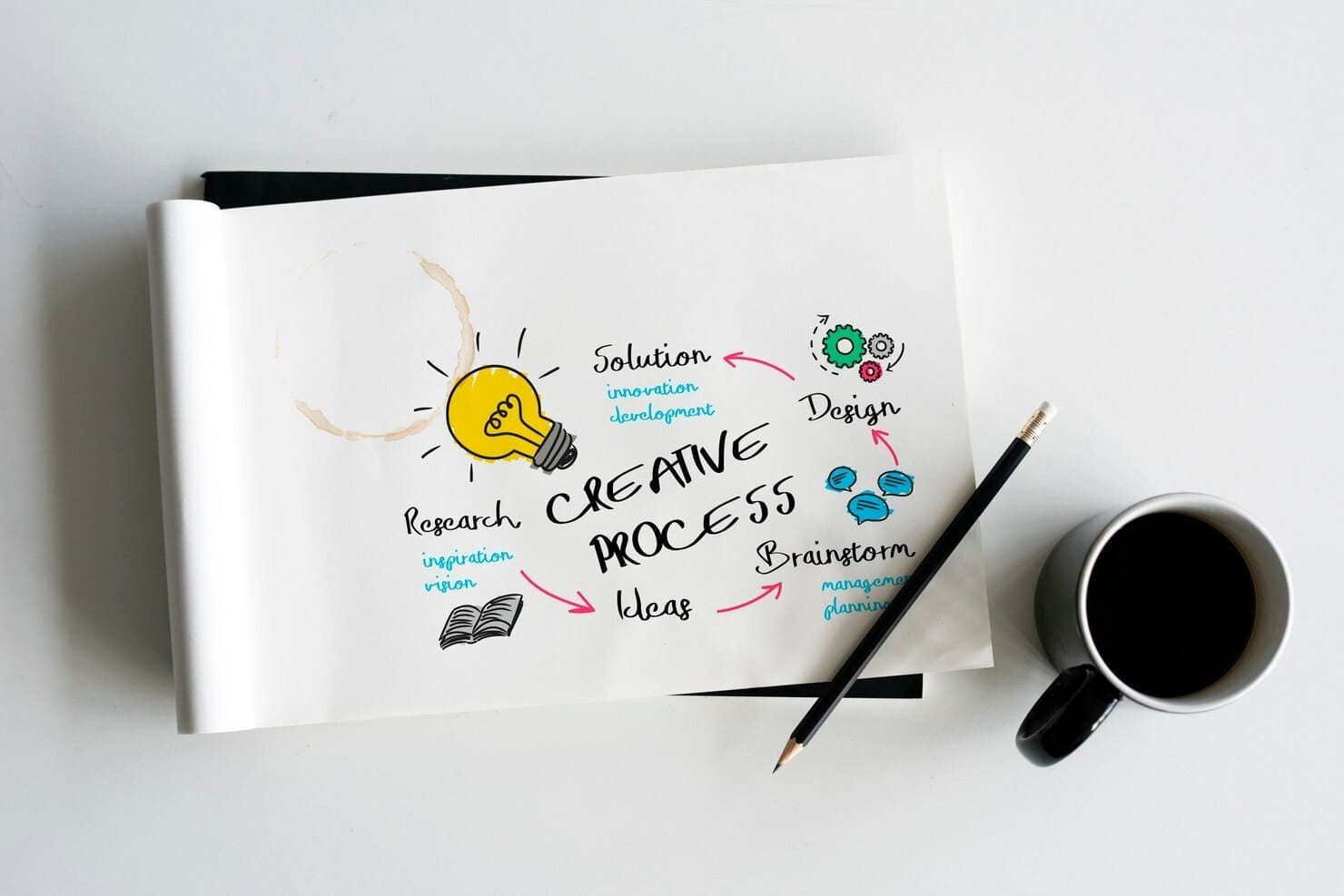
The 5 Core Ingredients of an Effective Brief
Writing a brief doesn't need to be complicated. In fact, the best ones are models of clarity and simplicity. When you're working with a creative strategist like me, these are the five key questions we need to answer together. This is how to write a brand brief that gets results.
1. The Objective: What is the #1 Goal?
This is the North Star for the entire project. What is the single most important action you want this creative piece to achieve? If you can't define this in one sentence, we're just decorating.
Example for a coach: "Get 50 sign-ups for my upcoming webinar on overcoming burnout."
Example for an e-commerce brand: "Drive traffic to our new summer collection page and achieve 100 sales in the first week."
2. The Audience: Who, Specifically, Are We Talking To?
We can't be effective if we're trying to talk to everyone. Who is this specific piece of content for? What are their hopes, fears, and problems? The more specific, the better.
Example: "We're talking to busy female entrepreneurs aged 30-45 who are feeling overwhelmed by their to-do lists and are looking for a system to get their time back."
3. The Key Message: What's the One Thing They Must Remember?
If the viewer only remembers one single thing after seeing your video or graphic, what should it be? This forces you to distill your message down to its most potent form.
Example: "That my 3-step framework can save them 10 hours of admin work every single week."
4. The Call-to-Action (CTA): What Exactly Should They Do Next?
Be explicit and direct. What is the precise action they need to take? Don't be vague.
Instead of: "Check out my webinar."
Use: "Click the link in my bio to register for the free 'Time Freedom' webinar now."
5. The Deliverables: What Are the Final Assets You Need?
This is the logistical part that prevents scope creep and confusion. What are the specific assets you need me to create from the footage or ideas we've discussed?
Example: "One 60-second square video for Instagram Feed, one vertical version for Reels/Shorts, and two static graphics for Facebook ads using the key quotes." Knowing this upfront helps me plan the project efficiently and is a great reason to learn how to organize your raw footage before sending it over.

How a Simple Brief Saves You Time, Money, and Sanity
This is where the magic happens for you, the busy business owner. When you provide a brief like this—and don't worry, my onboarding process includes a simple design brief template to make this effortless for you—it streamlines our entire collaboration.
It dramatically reduces the need for endless back-and-forth emails and revisions because we established the success criteria upfront. It ensures the final product is laser-focused on your business objective, not just on looking pretty. Most importantly, it empowers me to deliver my absolute best creative work because I have a crystal-clear understanding of the problem I'm being hired to solve. It allows me to use my skills to find the best solution, which is one of the core deeper outsourcing insights—you're hiring a strategic brain, not just a pair of hands. This clarity on the "why" behind the project is just as important as the details behind the 'how' of branding visuals.
Clarity is the Foundation of Great Creative Work
The creative brief is the single best tool for transforming a vague idea into a tangible, strategic asset that grows your business. It turns a subjective request ("make it cool") into an objective mission ("get 50 webinar sign-ups"). It builds a foundation of clarity and strategy that ensures the work we do together isn't just beautiful, but that it's also effective. It’s an act of strategic leadership, and it’s the best way to get a stellar ROI on your creative investment.
Want to ensure every creative project hits the mark on the first try? Let's work together using a process that’s built on clarity and strategy.